
She Kept Doing It Anyway: Jenny's Path to AcademySTAY


Jenny grew up playing social worker on the playground. Her parents would have to pull her aside, don't ask strangers why they're sad, but she kept doing it anyway. So she went straight into nonprofits and government agencies after school.
In 2005, Jenny was doing work she loved, helping families navigate domestic violence as a specialist at Child Protective Services. Then her youngest son, Jordan, was diagnosed with Trisomy 18. It is always a fatal diagnosis. After he passed, someone said something to her that she has never forgotten.
"Everyone's going to see that Jordan changed your life. But it's up to you what the change is."
The next day, she signed up for her first college class. She was in her late 30s. Undergrad in three years, then straight into a master's in business administration.
A few years ago, a good friend asked her if you could have any kind of nonprofit, what would it be? She missed working with foster youth.
Jenny knew what was facing foster youth aging out of the system: homelessness and the near impossibility of finishing college. 93% of foster youth want to attend college or trade school someday, but fewer than 4% graduate.
“That’s tied directly to financial insecurity, housing instability, and not feeling like they belong in any specific community.”
It isn’t, she’s quick to point out, because these young people aren’t capable. It’s because the system assumes readiness that almost no 18-year-old actually has, whether they’re foster youth or not.
"Not very many people are just instantly ready. I'm eighteen, I can afford an apartment by myself, I have all the furniture that I need, I have the life skills I need, I can cook, and I know exactly how to keep things sanitary so that I'm not giving myself food poisoning. Not everybody has that. But a lot of times they still have parents, or aunts and uncles, or whoever in their lives who are helping them gain those skills."

The national picture is even harsher. Jenny recently came back from a summit in Washington, D.C., where she learned that 24 states offered no extended foster care beyond age 18. In some places, the day a young person graduates high school is the day they lose access to nearly every formal support system available to them. A single period of homelessness in some states can trigger loss of medical coverage, food, assistance, and eligibility for programs designed to help young adults find their footing.
"You lose access to extended foster care forever," Jenny says. "You don't get the medical, you don't get the food stamps. All of that's gone."
California has more support than most. But Jenny doesn't mistake that for enough.
"It's a supplement at best."
That friend's question turned into a plan. Jenny told him about her dream of a housing community where young adults transitioning could live while attending college or trade school, build life skills, and find their footing together. He listened. Then he said something that almost never happens.
"If you're serious, I'm serious."
She was. In March of 2023, what would have been Jordan's eighteenth birthday, AcademySTAY was born. For the past three years, her team has created a housing community where young adults can live and thrive together.
Students are welcomed with a fully furnished apartment. Individual rooms. A week's worth of groceries. Bedding and towels, they get to choose themselves. Up to $100 of art to make the walls their own. Students are assigned case managers who have access to an on-site social worker, life-skills classes 4 to 8 times a week, a community garden, and e-bikes.
Jenny has learned that you don’t take on your students’ failures or their successes. What she takes on instead is the conditions that make success possible. A safe place to sleep at night before a test. An interview outfit pulled out from the clothing closet, and in the little moments between work and play, they met. Stopping by campus on a sunny afternoon, she saw a handful of students mid-dance party in the parking lot. Describing it to me, she leaned forward, her whole face lighting up,
“I came here just for a minute to drop some stuff off, and there were a few students having a little dance party. I spent my whole weekend thinking about it.”
These moments are not accidents but the fruit of a whole community at work. The community is built around game nights in a shared garden, where students text each other about how to find rosemary and whether anyone has a cup of sugar to spare. Karaoke nights are one of Jenny's favorite student moments, because “you have to be happy to want to sing.”
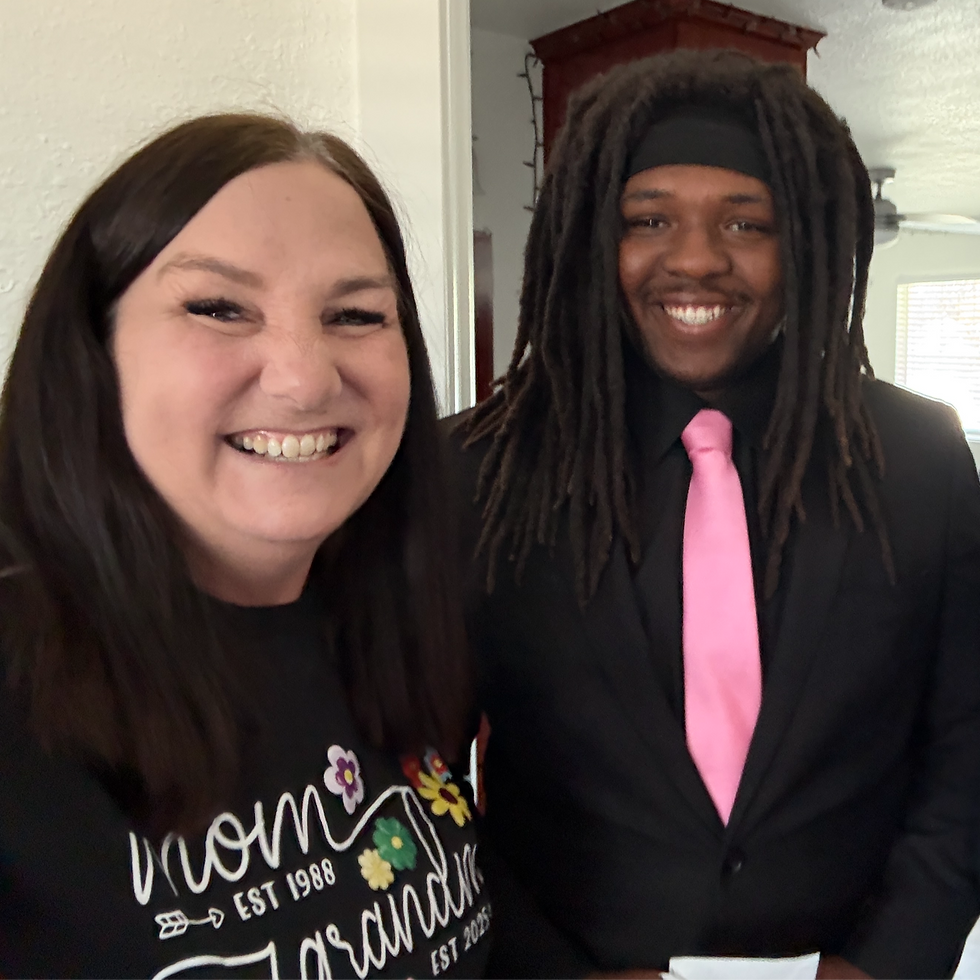
Jenny can’t hold back her joy when she talks about her students, their new experiences, their growth, the future she can already see taking shape in them. She lights up completely. She talks about students who walked out to the bus stop on their first day of college, with shaking knees, and came home that afternoon, saying it wasn't so bad. I met four new people. A student who went from spending every dollar on Instacart to creating a detailed budget and saving toward their goals because they now have that skill. It’s a student feeling empowered to advocate for emotional support animals and winning that appeal. It’s the student who receives a graduation party after achieving their goal.
This is what Jenny's job actually is. Not rescuing anyone. Not taking credit for anyone’s hard work. Just making sure they know, really know, that they matter.
“Do you know what a big deal you are?”
Almost every morning, Jenny picks up trash between her car and her office. She leaves blank spaces in her calendar because there’s always a student who needs something she didn’t see coming. This is what compassion looks like when it becomes a daily practice at AcademySTAY.
It also looks like ten Amazon boxes appearing on the doorstep overnight after a wish list is posted: laundry detergent, paper towels, and toothbrushes. It looks like volunteers arriving week after week to run life skills classes, reorganize the clothing closet, tend a garden with sixteen raised beds where students can grow their own food, and find a little peace. It looks like community partners funding e-bikes so a student can get to class, or covering transportation to a DMV appointment that would otherwise never happen.

Thirty years in human services has taught her that you don't take on your students' failures, nor their successes. What you do is show up. You start at square one. You hand them the oar and stay in the boat until they no longer need you. Then you let them sail.
"Everyone's going to see that trauma touched your life. But you get to choose what the change is."
At AcademySTAY, forty-seven young people are learning exactly that.
If you'd like to learn more about AcademySTAY, visit academystay.org. If you know a young adult who might be a fit for our program, applications are open at academystay.org/apply.


Comments